Yard Drainage Guides for Wet Yards, Runoff & Drainage Routes
Start with the symptom you can observe, then use an interactive screen or field measurement to narrow the route before choosing drainage hardware.
Water pooling after rain
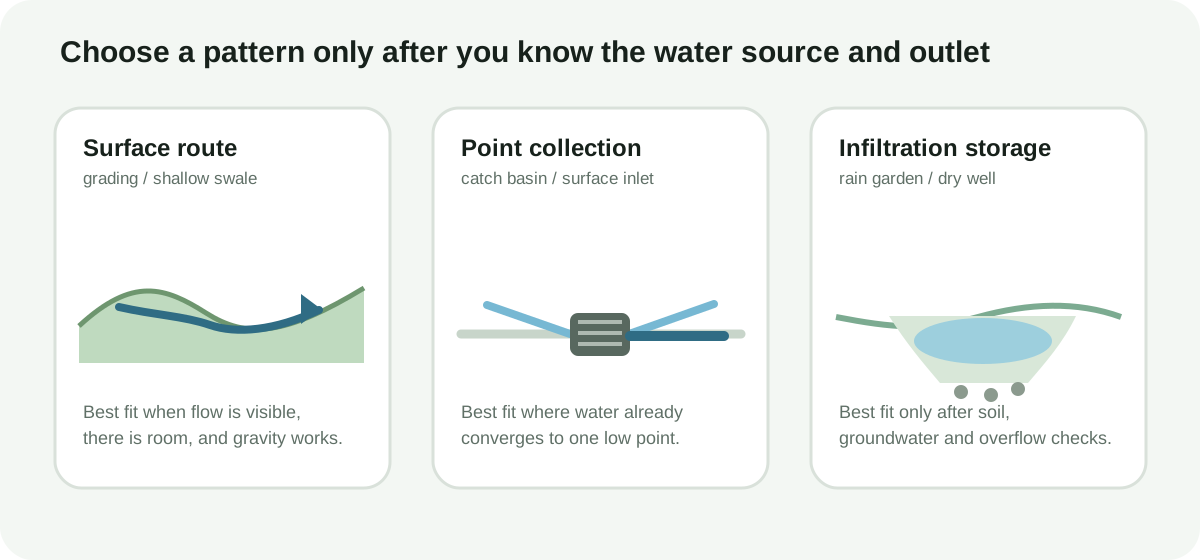
Sort a wet-yard symptom by location, persistence, visible flow and outlet availability before buying materials.
Roof runoff routeDownspout drainage
Estimate runoff from one roof branch and calculate end-to-end route grade to a candidate outlet.
Point vs linear collectionCatch basin vs French drain
Compare a surface inlet with a subsurface collector based on how the water actually arrives.
Soil field testSoil infiltration test
Record repeated water-level drops and elapsed time to calculate an observed field infiltration rate.
Route choiceFrench drain vs swale
Surface flow, shallow seepage, route width and outlet availability change which option deserves measurement first.
StorageDry well sizing
Enter catchment, storm, capture target and void fraction to separate water volume from excavation volume.
ElevationYard grading
Measure run and drop, calculate percent grade, then decide whether a gravity path is plausible enough to verify.
Infiltration choiceRain garden vs dry well
Compare visible surface storage with underground storage by soil, overflow, maintenance and site constraints.
Field workflow12-step drainage checklist
Trace source, route, outlet, soil, utilities and overflow before digging or asking for quotes.
After installationYard drainage troubleshooting
Use outlet flow, storm size and symptom changes to decide what to inspect before replacing a drain.
Field historyStorm observation log
Record rainfall, pooling duration and outlet flow over multiple storms in local browser storage.